
Biblical typology reveals recurring patterns, persons, and events foreshadowing Christ, offering profound insights into God’s plan.
Discovering these types and shadows, documented in resources like the New World Translation Study Bible, enriches scriptural understanding.
What are Types and Shadows?
Types in the Bible are persons, events, or things in the Old Testament that prefigure Christ and New Testament realities. They aren’t merely similarities, but divinely intended parallels, offering a glimpse into God’s unfolding plan. Shadows, closely related, represent the symbolic representation of spiritual truths, often linked to the Law and sacrificial system.
For example, the New World Translation Study Bible highlights how Noah’s Ark served as a type, foreshadowing salvation through Christ. The Passover Lamb, similarly, prefigured Christ as the ultimate sacrificial Lamb of God. These aren’t accidental resemblances; they are deliberate patterns woven into scripture. Understanding these types and shadows requires careful study and reliance on resources like those available on Jehovah’s Witnesses’ official website, offering context and accurate interpretations.
The Importance of Recognizing Types and Shadows
Recognizing types and shadows unlocks a deeper appreciation for the unity and coherence of the Bible, revealing God’s consistent purpose throughout history. It demonstrates how the Old Testament isn’t simply a historical record, but a prophetic foreshadowing of Christ and the New Covenant.
The New World Translation Study Bible and resources on Jehovah’s Witnesses’ website emphasize that understanding these patterns strengthens faith and provides a richer understanding of biblical prophecies. It allows readers to see how God’s promises were fulfilled in Jesus Christ. Ignoring these typological connections risks missing the profound spiritual truths embedded within scripture, hindering a complete grasp of God’s word and His redemptive plan for humanity.
Old Testament Types
Old Testament narratives abound with figures and events – Noah, the Passover lamb, and the Tabernacle – that symbolically prefigure Jesus Christ and His sacrifice.
Noah and the Ark as a Type of Christ
The story of Noah’s Ark serves as a powerful type, or foreshadowing, of Christ and salvation. Just as the flood represented divine judgment against wickedness, Christ’s sacrifice addresses sin.
The ark itself symbolizes Christ, providing safety and preservation from destruction for those inside – mirroring how faith in Christ offers refuge from God’s wrath.
Noah and his family, saved through the ark, represent the faithful who are saved through Christ. The worldwide flood’s scope parallels the global reach of sin and the universal need for redemption.
Furthermore, the new earth emerging after the flood hints at the restored creation promised through Christ’s kingdom. Studying this typology, aided by resources like the New World Translation Study Bible, deepens our appreciation for God’s redemptive plan.
The Passover Lamb as a Type of Christ
The Passover lamb in Exodus 12 is a striking type of Jesus Christ. The Israelites’ deliverance from slavery in Egypt, secured by the shedding of the lamb’s blood, foreshadows our liberation from sin through Christ’s sacrificial death.
Just as the lamb’s blood protected the firstborn from the angel of death, Christ’s blood provides atonement for our sins, shielding us from eternal destruction. The lamb, without blemish, mirrors Christ’s perfection. The practice of eating the lamb symbolizes partaking of Christ’s life through faith.
The New Testament explicitly connects the Passover lamb to Christ (1 Corinthians 5:7), highlighting this crucial typology. Resources like those found on Jehovah’s Witnesses’ official website offer further insight into this profound connection, enriching our understanding of God’s redemptive plan.
The Bronze Serpent as a Type of Christ
The bronze serpent, crafted by Moses at God’s command (Numbers 21:4-9), serves as a powerful type of Christ. When the Israelites were bitten by venomous snakes as punishment for their complaining, looking upon the raised bronze serpent brought healing. This act foreshadows how looking to Jesus on the stake offers salvation from the venom of sin and its consequence – death.

Jesus himself drew a parallel, stating, “Just as Moses lifted up the serpent in the wilderness, so must the Son of Man be lifted up, that everyone who believes in him may have eternal life” (John 3:14, 15). The serpent’s venom represents sin’s deadly effect, while the bronze serpent symbolizes Christ’s provision for healing.
Studying biblical typology, as facilitated by resources like the New World Translation Study Bible, reveals the depth of this connection and God’s consistent pattern of foreshadowing through types and shadows.
Melchizedek as a Type of Christ
Melchizedek, the king of Salem and priest of the Most High God (Genesis 14:18-20), strikingly prefigures Jesus Christ. He appears suddenly, without genealogical record, and blesses Abraham, receiving tithes from him. This demonstrates his superior position, foreshadowing Christ’s unique priesthood, not derived from Levitical lineage, but appointed by God.
The New World Translation Study Bible highlights that Melchizedek’s priesthood is “without beginning of days or end of life,” mirroring Christ’s eternal priesthood. Psalm 110:4 further supports this, describing Christ as a priest “according to the pattern of Melchizedek.”
This type illustrates Christ’s royal dignity and priestly role, exceeding the limitations of the Aaronic priesthood. Understanding these biblical patterns, available through resources like Jehovah’s Witnesses’ official website, deepens appreciation for God’s prophetic plan.
The Tabernacle and its Furnishings as Types of Christ
The Tabernacle, a portable sanctuary for the Israelites, served as a detailed type of Christ and the spiritual temple. Its structure, materials, and furnishings all pointed forward to aspects of God’s Son. The Holy of Holies, housing the Ark of the Covenant, represented God’s presence and foreshadowed Christ’s divine nature.
The Ark itself, covered in gold, symbolized Christ’s glory and perfection. The golden table with showbread represented Christ as the bread of life, sustaining spiritually. The lampstand signified Christ as the light of the world, illuminating truth.
Resources like the New World Translation Study Bible explain how the Tabernacle’s layout and sacrificial system prefigured Christ’s sacrifice and mediatorial work, offering access to God. Studying these types, found on Jehovah’s Witnesses’ website, reveals the depth of God’s prophetic design.

New Testament Fulfillment
The New Testament explicitly demonstrates how Old Testament types and shadows find their ultimate fulfillment in Jesus Christ, validating God’s prophetic word.
Christ as the Fulfillment of Old Testament Types
Jesus Christ stands as the definitive fulfillment of the numerous types and shadows embedded within the Old Testament scriptures. The New World Translation Study Bible highlights how figures like Noah, the Passover lamb, and Melchizedek prefigured aspects of Christ’s life, death, and ministry.
For instance, Noah’s ark offered salvation from a flood, mirroring Christ’s provision of salvation from spiritual ruin. The Passover lamb’s sacrifice protected the Israelites, foreshadowing Christ’s sacrificial death for humanity’s redemption. Melchizedek’s priesthood, distinct from the Levitical order, typified Christ’s unique and eternal priesthood.
These aren’t mere coincidences, but deliberate prophetic patterns revealing God’s unfolding plan. Recognizing these connections deepens our appreciation for the coherence and divine inspiration of the Bible, demonstrating Christ as the central figure throughout scripture.
How the New Testament Interprets Old Testament Types
The New Testament authors consistently demonstrate an understanding of, and actively interpret, Old Testament types as pointing directly to Jesus Christ. They don’t view these as accidental parallels, but as divinely intended foreshadowings. The New World Translation Study Bible aids in tracing these connections.
For example, the book of Hebrews explicitly draws parallels between Christ and Melchizedek, establishing Christ’s superior priesthood. The Gospels frequently present Jesus as the fulfillment of Old Testament prophecies and typological representations, like the suffering servant.
This interpretative approach reveals a deliberate continuity between the Old and New Testaments, showcasing God’s consistent plan of salvation. By understanding how the New Testament authors viewed the Old, we gain a richer, more profound grasp of biblical truth and Christ’s central role.

Specific Old Testament Shadows and Their New Testament Realities
Old Testament rituals, like sacrifices, served as shadows, prefiguring Christ’s ultimate sacrifice for atonement, a central tenet revealed in scripture and publications.
The Levitical Priesthood and Christ’s Priesthood
The Levitical priesthood, established under the Old Covenant, served as a distinct shadow of the superior priesthood of Jesus Christ. Levitical priests, being imperfect humans, continually offered sacrifices for their own sins and those of the people, a temporary covering.
However, Christ, being sinless and divine, offered a single, perfect sacrifice – himself – providing complete and everlasting atonement. He is a priest “according to the order of Melchizedek,” a priesthood not passed down through lineage, but appointed by God directly.
This highlights a crucial distinction: the Levitical priesthood was earthly and temporary, while Christ’s priesthood is heavenly and eternal. Understanding this typology, as detailed in resources like the New World Translation Study Bible, reveals the fulfillment of God’s plan and the perfection found in Christ’s ministry.
Sacrifices and Atonement – A Shadow of Christ’s Sacrifice
Old Testament sacrifices – lambs, goats, grain offerings – were shadows pointing to the ultimate sacrifice of Jesus Christ for the atonement of sins. These animal sacrifices, repeatedly offered, could never truly remove sin; they merely provided a temporary covering, foreshadowing a need for a perfect, lasting solution.
Christ’s sacrifice, however, was a one-time, complete payment for the sins of all mankind. He became the ultimate Passover Lamb, delivering believers from spiritual death. The shedding of His blood symbolizes the cleansing from sin, fulfilling the requirements of divine justice.
Resources like the New World Translation Study Bible illuminate how these ancient rituals were divinely ordained to illustrate the profound depth and significance of Christ’s redemptive work, offering true and lasting atonement.
The Promised Land as a Shadow of Heaven
The Promised Land, given to Israel under Joshua, served as a shadow or symbolic representation of the heavenly kingdom and the eternal life promised to faithful Christians. It wasn’t merely a physical territory, but a prefiguration of a spiritual inheritance – a place of rest and peace with God.
Just as entering Canaan required obedience and faith, gaining access to heaven demands a similar commitment to God’s will. The challenges faced in possessing the land mirrored the spiritual warfare Christians encounter in their pursuit of righteousness.
The New World Translation Study Bible highlights how this earthly promise pointed to a greater, heavenly hope, a perfect and everlasting dwelling place with Jehovah, far surpassing any earthly possession.
The Manna as a Shadow of the Bread of Life
Manna, the miraculous food provided to the Israelites during their wilderness wanderings, beautifully illustrates a shadow of Jesus Christ, “the bread of life” (John 6:35). Just as manna sustained physical life in the desert, Christ sustains spiritual life for believers.
The Israelites had to gather manna daily, symbolizing the need for continual reliance on God’s provision. Similarly, Christians are encouraged to daily seek spiritual nourishment through prayer and Bible study, receiving Christ’s life-giving word.
Resources like those found on Jehovah’s Witnesses’ official website explain how this Old Testament provision foreshadowed the greater spiritual sustenance offered through Jesus’ sacrifice, providing eternal life to those who exercise faith.
Understanding Prophecy and Types
Prophecy skillfully unveils types and shadows, revealing God’s foreordained plan through symbolic representations and foreshadowing, deepening biblical comprehension.
The Role of Prophecy in Revealing Types
Prophecy serves as a crucial lens through which types and shadows within the Old Testament are illuminated, revealing their ultimate fulfillment in Christ. The New World Translation Study Bible emphasizes how prophetic utterances often contained embedded symbolic representations, foreshadowing future events and individuals.
These prophetic glimpses weren’t merely predictions; they were divinely orchestrated patterns designed to deepen understanding of God’s redemptive plan. Examining prophecies alongside their New Testament fulfillments demonstrates a deliberate, interconnected narrative. For instance, understanding Daniel chapter 2’s prophecy, particularly the feet of iron and clay, provides context for recognizing typological connections.
The role of prophecy isn’t simply to foretell, but to unveil the deeper meaning embedded within historical events and figures, preparing those who study the scriptures to recognize Christ as the ultimate fulfillment of God’s promises.
Distinguishing Between Types, Shadows, and Allegories
While often used interchangeably, types, shadows, and allegories represent distinct literary devices employed in scripture. Types are real events or persons in the Old Testament that prefigure Christ, like Noah’s Ark foreshadowing salvation. Shadows are similar, representing aspects of Christ’s ministry or the new covenant, such as Levitical sacrifices hinting at Christ’s atonement.
Allegories, however, are extended metaphors where every element carries a symbolic meaning, often requiring a more interpretive approach. The New World Translation Study Bible aids in discerning these nuances. Recognizing these differences is vital to avoid over-interpretation and maintain contextual accuracy.
Understanding that types are historical realities pointing forward, shadows are representations of future realities, and allegories are symbolic narratives, allows for a richer and more precise understanding of biblical typology, as highlighted on Jehovah’s Witnesses’ official website.
Resources for Studying Types and Shadows
Explore the New World Translation Study Bible, Jehovah’s Witnesses’ website, and online tools for in-depth study of biblical types and shadows.
The New World Translation Study Bible
The New World Translation Study Bible stands as a premier resource for those delving into the rich realm of biblical typology. Published by Jehovah’s Witnesses, this edition provides an accurate and easily readable translation of the Holy Scriptures, coupled with extensive study aids crucial for discerning types and shadows.
It’s complete with a wealth of cross-references, meticulously linking related verses to illuminate typological connections. Detailed maps offer geographical context, while an accurate Bible dictionary clarifies terms and concepts. The books are conveniently listed in order, facilitating quick verse location. Footnotes within the text provide valuable insights, helping readers understand each verse within its broader context and identify potential typological significance.
This Bible doesn’t merely present the text; it actively guides the reader toward a deeper appreciation of the prophetic patterns woven throughout Scripture, making it an invaluable tool for anyone seeking to understand the fulfillment of Old Testament foreshadowings in the New Testament.
Jehovah’s Witnesses Official Website
Jehovah’s Witnesses’ official website (jw.org) serves as a comprehensive digital library, offering free access to the Bible and a wealth of Bible-based publications. This platform provides invaluable resources for studying biblical types and shadows, enabling users to explore the connections between Old and New Testament prophecies.
The website features various Bible translations, allowing for comparative study. Users can access articles explaining the meaning of specific verses and phrases, often highlighting typological fulfillments. It describes the beliefs and organization, offering context for understanding their approach to biblical interpretation.
Furthermore, the site provides current news and publications that often address prophetic themes, aiding in the identification of types and shadows. The ability to read, listen to, or download the Bible online makes it a readily accessible resource for anyone seeking a deeper understanding of God’s Word and its intricate patterns.
Online Bible Tools and Commentaries
Numerous online Bible tools and commentaries can significantly aid in identifying and understanding types and shadows within Scripture. These resources often provide cross-references, historical context, and interpretive insights that illuminate the connections between Old Testament figures and events with their New Testament fulfillments.
Many platforms offer access to multiple Bible translations, facilitating comparative study and revealing nuances in wording that can highlight typological relationships. Interactive features, such as verse-by-verse commentaries and concordances, allow for in-depth exploration of specific passages.
While exploring these tools, it’s crucial to prioritize resources grounded in sound biblical scholarship and avoid those promoting speculative or unsubstantiated interpretations. Utilizing a combination of tools, alongside the New World Translation Study Bible, can foster a richer and more informed understanding of biblical typology.
Common Misconceptions About Types and Shadows
Avoid over-interpretation; context is vital when discerning types and shadows, ensuring interpretations align with established biblical principles and avoid speculative leaps.
Avoiding Over-Interpretation
A crucial pitfall in studying biblical typology is the temptation to find connections where none genuinely exist. Over-interpretation arises when individuals impose their own ideas onto Scripture, rather than allowing the text to speak for itself. It’s easy to see patterns and parallels, but discerning genuine types requires careful consideration and adherence to sound hermeneutical principles.
The New World Translation Study Bible and resources from Jehovah’s Witnesses emphasize the importance of letting the New Testament itself illuminate Old Testament types, rather than constructing artificial links. Resist the urge to force a connection; a true type will be consistently supported by the broader biblical narrative and confirmed by New Testament usage. Remember, the goal is to understand God’s revealed plan, not to invent new ones.
Focus on established patterns and avoid speculative or highly subjective interpretations. A robust understanding of context, historical background, and the overall message of Scripture is essential to avoid misapplying typology and distorting God’s Word.
The Importance of Context
Understanding context is paramount when identifying and interpreting types and shadows within the Bible. Isolating a verse or event without considering its surrounding narrative can lead to misapplication and inaccurate conclusions. The New World Translation Study Bible consistently highlights the necessity of examining verses within their broader literary and historical setting.
Consider the author’s intent, the original audience, and the overall message of the book. A type isn’t simply a superficial resemblance; it’s a divinely intended foreshadowing that gains meaning from its context. Resources from Jehovah’s Witnesses emphasize that the New Testament often provides the key to unlocking the typological significance of Old Testament events.
Avoid reading into the text what isn’t there. A careful, contextual reading will reveal genuine types, while speculative interpretations often fall apart under scrutiny. Always prioritize the clear teaching of Scripture and resist the temptation to impose personal biases.
Exploring types and shadows deepens our appreciation for God’s intricate plan, revealed through Scripture and resources like the New World Translation.
The Deeper Meaning Revealed Through Types and Shadows
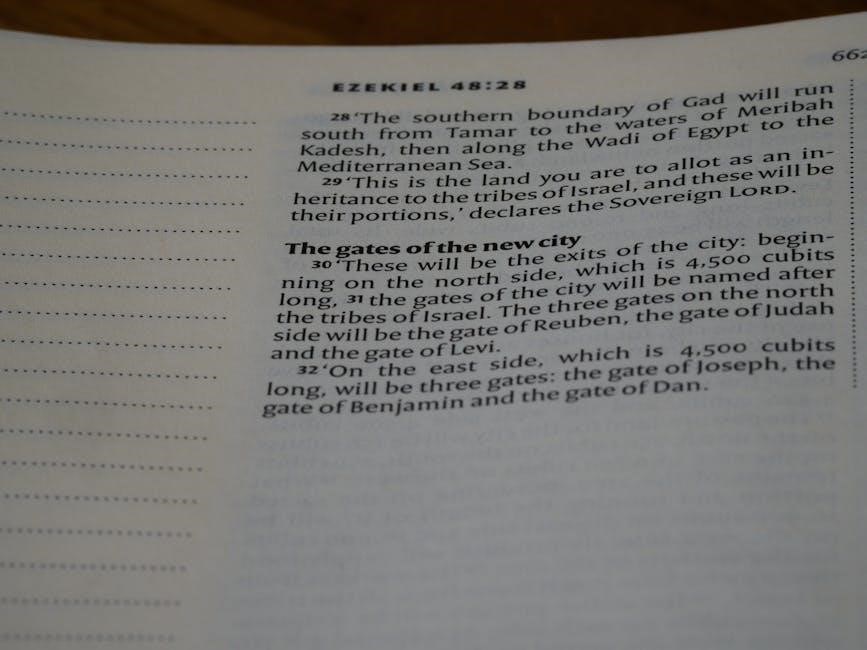
Unveiling biblical typology transcends a simple reading of scripture, revealing a carefully orchestrated narrative pointing to Jesus Christ. Recognizing these types and shadows—like Noah’s ark foreshadowing salvation, or the Passover lamb representing Christ’s sacrifice—illuminates the consistency of God’s purpose throughout history.
Resources such as the New World Translation Study Bible and the official Jehovah’s Witnesses website provide invaluable tools for discerning these connections. They offer contextual understanding, cross-references, and insightful commentary, enabling a richer, more profound grasp of the Bible’s message.
This deeper understanding isn’t merely academic; it strengthens faith and provides a more complete picture of God’s love and redemptive plan for humanity. It demonstrates how the Old Testament anticipates and finds its fulfillment in the New Testament.
Continuing Your Study of Biblical Types
Expanding your knowledge of biblical typology is a rewarding spiritual journey. Utilize resources like the New World Translation Study Bible, offering detailed cross-references and a comprehensive dictionary, to deepen your understanding of these prophetic patterns.

The Jehovah’s Witnesses official website provides accessible Bible-based publications and current news, aiding in contextual interpretation. Explore online Bible tools and commentaries, but always prioritize sources grounded in sound biblical principles. Remember to approach study with humility and a willingness to learn.
Consistent study, coupled with prayerful meditation, will unlock further layers of meaning within scripture, revealing the beautiful consistency of God’s plan throughout the ages. Embrace the challenge and enjoy the richness of biblical typology!