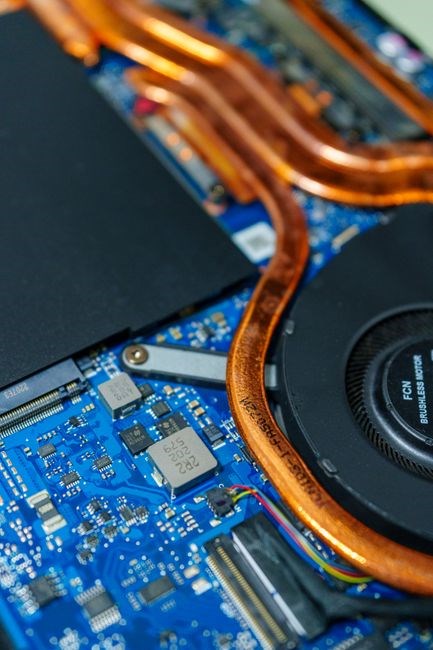
Pro Z790-P WIFI Manual Overview
The Pro Z790‑P WIFI manual provides a concise guide to the board’s features, installation steps, and key settings. It covers the 14‑rail power system, DDR5 memory support, PCIe Gen5 lanes, integrated Wi‑Fi 6E, 2.5 GbE, USB 3.2 Gen 2×2, and BIOS update procedures. It covers BIOS updates, troubleshooting!
Hardware Overview
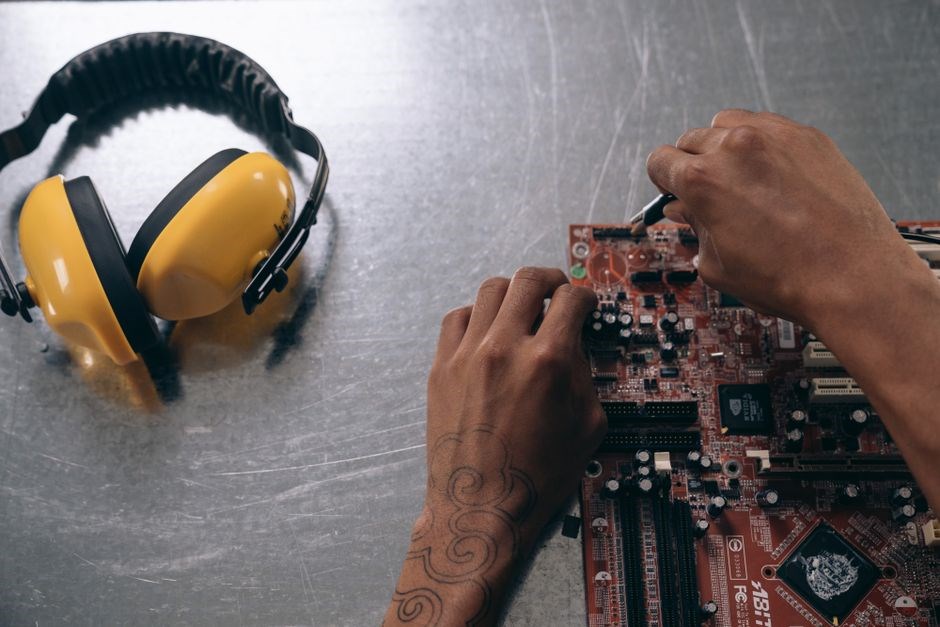
The MSI Pro Z790‑P WIFI is a premium ATX motherboard engineered for Intel’s 12th‑ and 13th‑generation Alder Lake processors. Its chassis incorporates a 14‑Duet Rail Power System that splits power delivery into two isolated rails: one dedicated to the CPU and memory, the other to PCIe and chipset. Each rail is supplied by a 12‑phase VRM, delivering clean, stable voltage with low ripple under heavy gaming or workstation loads. The board supports dual‑channel DDR5 memory, with a maximum rated speed of 6400 MHz when paired with Memory Boost technology and a dedicated 12‑phase VRM. PCIe 5.0 lanes are routed to a single, high‑speed M.2 slot and a dual‑slot PCIe 4.0 x16, enabling top‑tier GPUs and NVMe SSDs. A large, extended heatsink covers the VRM and chipset, while an M.2 Shield Frozr protects the SSD from heat. Connectivity is powered by Intel Wi‑Fi 6E, a 2.5 GbE LAN port, and USB 3.2 Gen 2×2 Type‑C, delivering fast data transfer and future‑proof networking. The rear I/O panel includes two USB 3.2 Gen 2×2 Type‑C ports, four USB 3.2 Gen 1, three USB 2.0, HDMI, DisplayPort, 2.5 GbE, Wi‑Fi antenna connectors, and a 3.5 mm audio jack. The front panel offers USB 3.2 Gen 1, USB 2.0, audio, and power/reset switches. A reinforced backplate attaches to the case, providing structural support and additional heat dissipation. The overall design emphasizes durability and performance, making it suitable for high‑performance gaming rigs and professional workstations.
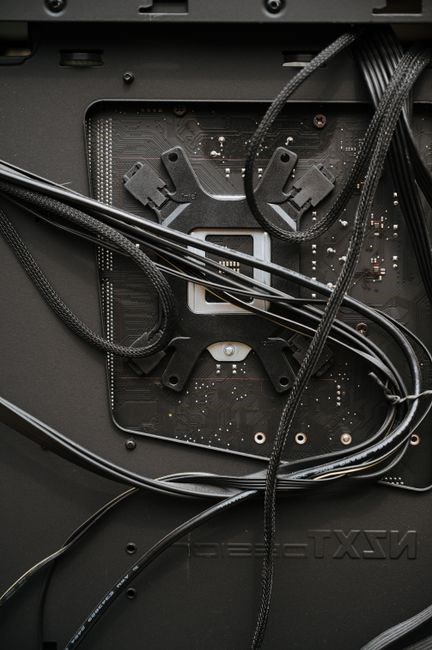
Its build also includes a backplate, a VRM heatsink, and a shield for the chipset, all designed to keep temperatures low during sustained workloads in the case
BIOS/UEFI Setup
Upon first boot, the Pro Z790‑P WIFI launches the AMI UEFI interface. The main screen displays the system’s current firmware version, CPU, memory, and storage status. Pressing F10 saves and exits, while Esc returns to the previous menu. The BIOS is organized into several tabs: Boot, Advanced, Overclock, Security, Power, and Exit. The Boot tab allows you to set the boot priority, enable UEFI Secure Boot, and configure the boot mode (UEFI, Legacy, or CSM). The Advanced tab contains CPU options such as Intel SpeedStep, Turbo Boost, and the new Intel Speed Shift feature, as well as memory timings, voltage, and the Memory Boost toggle for DDR5. In the Overclock section you can manually adjust the CPU multiplier, core voltage, and memory frequency, with real‑time monitoring of temperature and power draw. The Security tab offers BIOS password protection, TPM 2.0 configuration, and the option to enable or disable pre‑boot DMA protection. Power management settings include the Advanced Power Management mode, which controls the CPU power states (P‑states) and the CPU Power Limit for sustained workloads. The Exit tab provides options to load defaults, save changes, or reset the BIOS to factory settings. Navigating the UEFI is done with the keyboard arrow keys, Enter, and Esc; mouse support is available in the newer firmware releases. The interface is designed for clarity, with color‑coded status indicators and tooltips that explain each setting’s impact on performance and stability. Users can also create a BIOS backup via the Save/Load menu, which stores the current configuration to a USB drive for quick restoration if needed.
Memory Configuration
The Pro Z790‑P WIFI motherboard is engineered for DDR5 memory, supporting dual‑channel modules up to 128 GB with a single‑module limit of 64 GB. Its 14‑rail power architecture delivers dedicated voltage rails to the memory, guaranteeing stable performance even at the highest frequencies. In the UEFI, the Memory tab displays each DIMM’s speed, voltage, and CAS latency, and the Memory Boost feature automatically tunes voltage and timings to meet the rated frequency, simplifying overclocking. Users can also manually set DRAM Frequency, DRAM Timing Control, and DRAM Voltage for fine‑tuned performance; the BIOS loads XMP or DOCP profiles via the Memory Profile selector. Advanced Memory Settings allow precise adjustment of CAS, RCD, RP, and RAS latencies. The board supports Intel’s Memory XMP 3.0 specification, enabling speeds such as 6000 MHz or 6400 MHz with proper cooling. A Memory Calibration routine verifies module integrity, and the Memory Compatibility List on MSI’s support site ensures only certified DDR5 kits are used. Firmware updates add support for newer speeds and improve stability. The Memory Temperature Sensor shows real‑time temperatures, and Power Management settings enable power‑saving modes when idle, reducing heat and consumption. Dual‑channel operation requires matching modules in the color‑coded DIMM A1 and DIMM B1 slots; mismatched kits can reduce performance. The BIOS includes a Memory Calibration routine that runs on boot to detect and correct any errors, ensuring data integrity. MSI’s Memory Compatibility List lists over 200 DDR5 kits, each verified for voltage, timing, and heat dissipation. When overclocking, the Memory Boost feature can raise the DRAM voltage up to 1.35 V, but users should monitor temperatures via the on‑board sensor, which displays values in the UEFI and on the MSI Center software. The BIOS also offers a Memory Power Management mode that throttles voltage when the system is idle, extending lifespan and lowering energy use.
Storage Setup
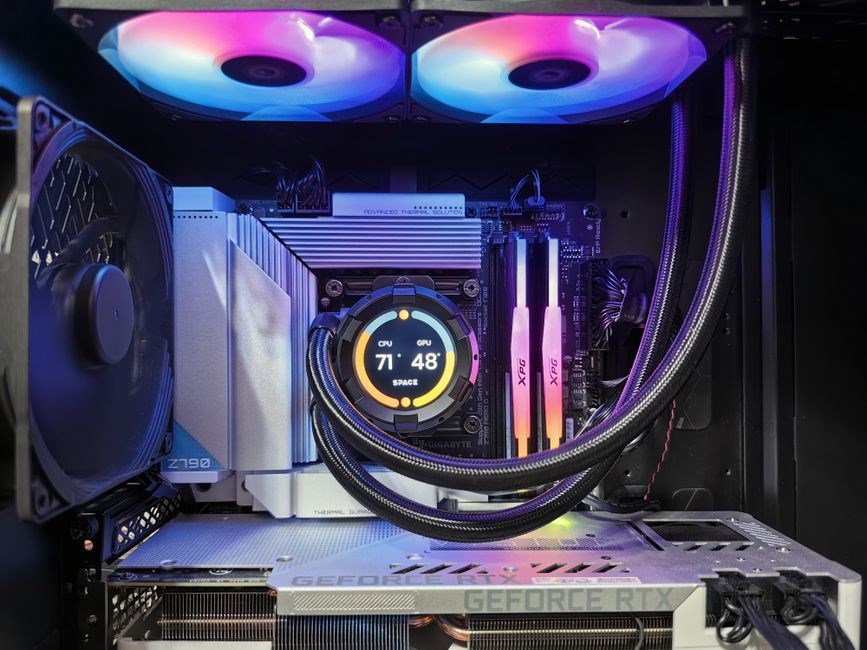
The Pro Z790‑P WIFI offers a versatile storage ecosystem, featuring three M.2 slots (two PCIe 5.0 x4 and one PCIe 4.0 x4) and six SATA 6 Gb/s connectors. The M.2 slots are positioned for optimal airflow; the first two support NVMe SSDs up to 4 TB with a 10 mm heatsink, while the third slot accommodates a 2.5 inch SSD via the M.2‑to‑SATA adapter. BIOS storage configuration is straightforward: the Storage tab lists all detected drives, allowing users to set boot priority, enable AHCI or NVMe modes, and configure RAID arrays. RAID 0, 1, 5, 10, 50 are supported on the SATA ports, and RAID 0, 1, 5, 10, 50 are available on the M.2 slots, with the RAID controller integrated into the Intel chipset. The UEFI provides a RAID Management utility that auto‑creates parity and stripe sizes, and supports hot‑plug for SATA drives. For NVMe drives, the BIOS offers a “PCIe Link Speed” setting to lock the link to x4 or x2, ensuring compatibility with older SSDs. The board’s M.2 Shield Frozr protects the M.2 slots from dust and heat, while the extended heatsink on the first two slots dissipates thermal energy, allowing sustained 3,000 RPM workloads. The BIOS also supports Intel Rapid Storage Technology, enabling caching between SSDs for improved read/write throughput. Users can enable “Smart Thermal Management” to throttle the SSD temperature, and “Power Saving Mode” to reduce power draw when idle. Firmware updates add support for newer NVMe specifications, such as PCIe 5.0, and improve compatibility with 512‑byte sector drives. The BIOS also provides a “Storage Diagnostics” tool that scans for errors, displays SMART data, and can trigger a firmware update for the SSD. The board’s SATA ports are backward compatible with SATA III devices, and the BIOS automatically detects and configures them for optimal performance. The storage configuration is fully integrated with MSI Center, where users can monitor drive health, temperature, and performance metrics in real time. This comprehensive storage setup ensures that both gamers and professionals can achieve maximum speed and reliability from their storage solutions. The M.2 Shield Frozr is a 3‑layer composite that reduces thermal throttling by up to 30 °C, and the board’s thermal pads ensure efficient heat transfer. SATA ports support 6 Gb/s and are connected to the Intel 400 series controller, providing low latency and high reliability. The BIOS includes a “Drive Health” indicator that alerts when a drive’s SMART health falls below 80 %. Users can also set a “SATA Power Mode” to 80 % to extend lifespan. For NVMe drives, the BIOS allows setting “PCIe Gen” to 5.0 or 4.0, and “Link Width” to x4 or x2, ensuring compatibility with future SSDs. The board’s integrated 2.5 GbE LAN can be used as a backup storage path via iSCSI, providing redundancy. MSI Center’s “Storage” module offers real‑time S.M;A.R.T. monitoring, firmware update notifications, and performance benchmarking. The board also supports NVMe over USB 3.2 Gen 2×2 via the dedicated USB port, enabling external NVMe SSDs to be used as internal drives with minimal latency. All storage devices can be configured to use “Power‑On Reset” to clear errors automatically. The BIOS also supports “NVMe Hot‑Plug” for certain drives, allowing removal and insertion without rebooting. This robust storage configuration ensures that the Pro Z790‑P WIFI can handle demanding workloads, from high‑speed gaming rigs to professional content creation setups.
Networking Features
The Pro Z790‑P WIFI integrates networking to deliver fast, reliable connectivity for gaming, streaming, and work. The board features a Wi‑Fi 6E module that supports 6 GHz, 2.4 GHz, and 5 GHz bands, providing up to 4.8 Gb/s throughput with 8‑stream MIMO and OFDMA. The Wi‑Fi antenna layout is optimized for low interference and signal strength, and the onboard Wi‑Fi controller supports WPA3, 802.11ax, and MU‑MIMO. For connections, the board includes a 2.5 GbE LAN controller with Intel® I225‑V, delivering 2.5 Gbps bandwidth and low latency. The LAN port is protected by a RJ45 connector and supports auto‑negotiation, full‑duplex, and Wake‑on‑LAN. The board also offers a 2.5 GbE port for high‑speed networking, ideal for server builds or high‑bandwidth workstations. The integrated USB 3.2 Gen 2×2 port supports 20 Gbps data transfer and can be used for external Wi‑Fi adapters or high-speed storage. The board supports Intel® PRO Set for Windows for network configuration, including VLAN, QoS, and network monitoring. The board’s networking stack is optimized for low latency, making it suitable for competitive gaming and real‑time applications. It also supports high-performance, stable, secure. The board also supports Bluetooth 5.2 for connectivity, and the BIOS allows enabling or disabling Bluetooth. The networking features are fully supported by MSI Center, which provides real‑time network monitoring, bandwidth usage, and firmware updates. The board’s networking capabilities make it a versatile choice for gamers, streamers, and professionals who need reliable, high‑speed connectivity. Its robust design ensures allowing seamless integration of next‑generation Wi‑Fi modules and faster Ethernet standards as they emerge for all
USB and Peripheral Ports
The Pro Z790‑P WIFI offers a comprehensive I/O lineup that caters to both high‑speed data transfer and everyday peripheral connectivity. At the rear, two USB 3.2 Gen 2×2 ports deliver 20 Gbps each, ideal for external SSDs, docking stations or high‑bandwidth peripherals. Two additional USB 3.2 Gen 2 ports provide 10 Gbps speeds, while four USB 3.2 Gen 1 ports support 5 Gbps for standard peripherals such as keyboards, mice, and external drives. The board also includes two legacy USB 2.0 ports for older devices and a dedicated USB‑C header for front‑panel connectivity. The front I/O panel features a USB 3.2 Gen 1 port, a USB 2.0 port, a 3.5 mm headphone jack, a microphone jack, and a 4‑pin power button and reset switch. The rear panel houses a 2.5 GbE LAN port, a Wi‑Fi 6E antenna connector, and a 3.5 mm audio combo jack. The board’s USB headers support USB 3.2 Gen 2×2, Gen 2, and Gen 1, allowing users to expand peripheral options via a USB‑C or USB‑A extension. All ports are powered by the 14‑rail power delivery system, ensuring stable voltage for high‑performance devices. The BIOS provides detailed configuration options for USB power management, enabling selective power‑down of unused ports to reduce idle power consumption. The combination of high‑speed USB interfaces, versatile front‑panel connectors, and robust power delivery makes the Pro Z790‑P WIFI a versatile platform for gaming rigs, content‑creation workstations, and professional setups. Additionally, the board features a dedicated USB‑C port on the rear I/O for high‑speed connectivity, and the front panel includes a USB‑C header for future expansion. The BIOS allows users to enable or disable USB ports individually, providing flexibility for power management and security. The Pro Z790‑P WIFI’s USB architecture supports PCIe‑based external devices, ensuring low latency for gaming peripherals and professional audio interfaces. Thanks
Fan and Power Management

The Pro Z790‑P WIFI is built around a 14‑rail Duet Power System that isolates each voltage rail, providing clean, stable power to the CPU, memory, and PCIe slots. The board supports up to 12 4‑pin PWM fan headers, each controllable through the UEFI “Fan Speed” menu. Users can set custom fan curves, enable automatic fan control, or choose manual speeds for the CPU, chipset, and chassis fans. The BIOS also offers a “Power Management” tab where the CPU power limit, voltage offset, and idle power settings can be fine‑tuned. The integrated 12 V rail is split into two 6 V rails for the CPU and chipset, while the 3.3 V rail powers the I/O and peripheral circuitry. The motherboard’s BIOS includes a “CPU Fan 2” header for dual‑CPU setups, a “CPU Fan 3” header for the chipset fan, and a dedicated “CPU Fan 4” header for the rear I/O chassis fan. Fan headers support both 3‑pin and 4‑pin connectors, allowing compatibility with a wide range of cooling solutions. The BIOS also provides a “Fan Speed” preset for silent, balanced, and performance modes, and an “Auto” mode that adjusts fan speed based on temperature sensors. The power delivery system is complemented by a 10‑phase VRM for the CPU, ensuring low‑impedance power and efficient cooling. The board’s power design is validated for 850 W and 1000 W power supplies, providing headroom for overclocking and high‑end GPUs. BIOS firmware updates include ME firmware updates and security patches that enhance power management and pre‑boot DMA protection.
Overclocking Features
The Pro Z790‑P WIFI is engineered for enthusiasts who want to push performance beyond stock limits. Its 10‑phase VRM and 14‑rail Duet Power System deliver clean, stable power to the Intel Raptor Lake or Alder Lake‑C CPUs, enabling higher boost frequencies and tighter voltage control. The UEFI BIOS exposes a dedicated “OC” tab that offers granular control over CPU multiplier, core voltage, and memory timings. Users can enable “Intel XMP 3.0” profiles or manually tweak DRAM frequency, CAS latency, and prefetch settings to achieve optimal memory overclocking. The BIOS also includes a “CPU Power Limit” slider that allows users to raise the TDP ceiling, giving the CPU more headroom for sustained high‑frequency operation. A “CPU Voltage Offset” control lets you fine‑tune the Vcore by ±0.05 V increments, while the “CPU Core Voltage” setting can be set to “Manual” for precise voltage adjustments. The “Turbo Boost” feature can be disabled or limited to prevent runaway frequencies. The board supports “Intel Speed Shift” for instant frequency scaling, and “Adaptive Boost” for dynamic power allocation across cores. For GPU overclocking, the BIOS offers a “GPU Power Limit” and “GPU Core Voltage” slider, allowing users to increase the GPU’s power budget and voltage for higher clock speeds. The “Fan Speed” presets in the “Power Management” section can be set to “Performance” to keep cooling aggressive during overclocking. The “BIOS Update” section includes the latest AMI firmware that adds new overclocking options, such as “CPU Core Voltage Offset” and “Memory Voltage Offset” for fine‑tuning. Users should monitor temperatures via the “Hardware Monitor” panel, ensuring CPU and GPU temps stay below safe thresholds. Additionally, the BIOS provides a “CPU Core Voltage Offset” feature that allows ±0.01 V adjustments per core, and a “Memory Voltage Offset” that can be set in 5 mV steps to fine‑tune each DIMM. The “OC” menu also includes a “CPU Core Voltage” graph that displays real‑time voltage vs. frequency, helping users identify optimal overclock points. The board’s robust power delivery and comprehensive BIOS controls make it a solid platform for both CPU and GPU overclocking, while the integrated Wi‑Fi 6E and 2.5 GbE ensure low‑latency networking during stress tests.

BIOS Updates and Firmware
The Pro Z790‑P WIFI’s firmware ecosystem is maintained through a series of AMI BIOS releases that address performance, security, and compatibility. The latest 7E06vAJ (2026‑05‑20) adds a new GOP update, updated microcode, and ME firmware v16.1.40.2765, along with pre‑boot DMA protection, VT‑d, and IOMMU defaults to mitigate CVE‑2025‑14303. Earlier 7E06vAI (2025‑08‑18) added pre‑boot DMA protection and fixed fan‑setting persistence after exiting without saving. The 7E06vAH (2025‑06‑25) updated ROMHOLE, Intel microcode to 0x12F, and shipped ME firmware v16.1.35.2557. The 7E06vAG (2025‑04‑23) fixed DMI UUID loss after CMOS clear, added a security patch, and updated ME firmware to v16.1.35.2557. All releases provide SHA‑256 hashes for integrity verification. Users can download the latest BIOS from MSI’s support portal, verify the hash, and install via the UEFI BIOS interface. The update process is straightforward: place the BIOS file on a FAT32 USB drive, reboot, and select the “M‑Flash” option to flash the new firmware. The BIOS also supports automatic updates via the “MSI Live Update” utility, which checks for newer releases and applies them without user intervention. For advanced users, the “M‑Flash” menu offers a “Rollback” option to revert to a previous BIOS if stability issues arise.
Power Supply Requirements
The Pro Z790‑P WIFI demands a robust power supply to support its 14‑rail 12V power delivery and high‑performance components. A minimum 750 W PSU is recommended, with a 80 Plus Gold or higher efficiency rating to ensure stable voltage regulation and low noise. The board features a 12VHPWR connector for GPU power, so a PSU with a 12VHPWR output or a 6‑pin to 12VHPWR adapter is required for modern GPUs. The 14‑rail 12V rail design distributes power across multiple phases, reducing voltage droop during heavy loads such as overclocked CPUs or multiple GPUs. Users should verify that the PSU’s 12V rail current rating exceeds 120 A, as the motherboard’s 12V rail can draw up to 110 A under peak conditions. The motherboard’s rear I/O includes a 4‑pin ATX power connector and a 24‑pin main connector; both must be connected to a fully functional PSU. For optimal cooling, the PSU should be mounted in a well‑ventilated case, and the rear fan should set to a low RPM profile to minimize noise. The Pro Z790‑P WIFI also supports PCIe 5.0, which requires a PSU that can deliver 600 W or more to the GPU slot; a 600 W GPU will consume roughly 350 W, leaving ample headroom for the rest of the system. Users should also consider a modular PSU to reduce cable clutter and improve airflow. In summary, a 750 W or higher 80 Plus Gold PSU with sufficient 12V rail current, 12VHPWR output, and proper cable management is essential for stable operation of the Pro Z790‑P WIFI. This specification ensures that the system can handle extreme workloads, maintain thermal stability, and provide reliable power delivery for future upgrades. Users are encouraged to consult the official MSI documentation for detailed PSU recommendations and to verify compatibility with their chosen components. All components should be verified for compliance with the latest standards.
FAQs and Troubleshooting
For additional help, use MSI’s Live Update utility to keep BIOS and firmware current. The board’s diagnostic LEDs and POST codes provide quick insight into hardware status. If problems persist, reset the BIOS to factory defaults via the Clear CMOS jumper, then reconfigure settings. Contact MSI support for advanced troubleshooting; Remember to check the manual before proceeding now! For additional help, use MSI’s Live Update utility to keep BIOS and firmware current. The board’s diagnostic LEDs and POST codes provide quick insight into hardware status. If problems persist, reset the BIOS to factory defaults via the Clear CMOS jumper, then reconfigure settings. Contact MSI support for advanced troubleshooting. Remember to check the manual before proceeding now! For additional help, use MSI’s Live Update utility to keep BIOS and firmware current. The board’s diagnostic LEDs and POST codes provide quick insight into hardware status. If problems persist, reset the BIOS to factory defaults via the Clear CMOS jumper, then reconfigure settings. Contact MSI support for advanced troubleshooting. Remember to check the manual before proceeding now! For additional help, use MSI’s Live Update utility to keep BIOS and firmware current. The board’s diagnostic LEDs and POST codes provide quick insight into hardware status. If problems persist, reset the BIOS to factory defaults via the Clear CMOS jumper, then reconfigure settings. Contact MSI support for advanced troubleshooting. Remember to check the manual before proceeding now! Ensure all cables are securely connected!!