
New Jersey’s CDL program ensures safe commercial vehicle operation.
Staying informed about Stay NJ property tax relief and NJ Transit updates is crucial.
Accessing the official manual is the first step towards obtaining this license.
What is a Commercial Driver’s License?
A Commercial Driver’s License (CDL) in New Jersey is a requirement for operating large, heavy vehicles. These vehicles are often categorized by their Gross Vehicle Weight Rating (GVWR) or their function, such as transporting passengers or hazardous materials. Obtaining a CDL signifies that a driver has met specific standards for knowledge, skill, and physical fitness, ensuring road safety for themselves and others.
The NJ CDL manual details these requirements extensively. It’s not merely a permit to drive; it’s a demonstration of competency. Recent news highlights the importance of reliable transportation, like NJ Transit’s efforts to modernize its fleet, mirroring the CDL’s focus on safe operation. Understanding the legal responsibilities and safety protocols outlined in the manual is paramount. Furthermore, awareness of state programs like Stay NJ, while unrelated to driving, showcases New Jersey’s commitment to its residents’ well-being, a value also reflected in stringent CDL standards.
Types of NJ CDL Endorsements
NJ CDL endorsements expand a driver’s operating privileges beyond the basic license. These endorsements, detailed within the NJ CDL manual, signify specialized training and qualifications. Common endorsements include those for Hazardous Materials (Hazmat), Tank Vehicles, Doubles/Triples, and Passenger transport. Each requires passing a specific knowledge test, and some necessitate a skills test.
The Hazmat endorsement, for instance, involves rigorous background checks and security threat assessments. Obtaining these endorsements isn’t simply about adding letters to your license; it’s about demonstrating proficiency in handling specific cargo or vehicle configurations. News regarding infrastructure improvements, like NJ Transit upgrades, emphasizes the need for skilled drivers capable of operating within evolving transportation systems. Even seemingly unrelated programs like Stay NJ reflect a state prioritizing responsible operation and citizen safety, mirroring the intent behind CDL endorsements. Understanding these options is crucial for career advancement and legal compliance.
Eligibility Requirements for a NJ CDL
NJ CDL eligibility hinges on meeting specific criteria outlined in the NJ CDL manual. Applicants must be at least 18 years old (21 for interstate commerce) and possess a valid NJ driver’s license. A thorough background check is conducted, scrutinizing driving records for disqualifying offenses like DUI or reckless driving. Applicants must also demonstrate physical and mental competency, often requiring a Department of Transportation (DOT) medical examination.
Furthermore, individuals must provide proof of U.S. citizenship or lawful permanent residency. The manual details acceptable documentation. Recent news concerning legal challenges, such as the Union County lawsuit, underscores the importance of accurate and truthful application information. Even programs like Stay NJ, focused on property tax relief, highlight the state’s emphasis on responsible citizenship. Meeting these requirements isn’t merely procedural; it ensures that only qualified and trustworthy individuals operate commercial vehicles, safeguarding public safety and supporting the state’s transportation infrastructure, including NJ Transit.
The NJ CDL Application Process

The NJ CDL manual guides applicants through a structured process. This includes obtaining the manual, completing the application, and submitting required documentation for review.
Step 1: Obtaining the NJ CDL Manual
The very first step in the New Jersey Commercial Driver’s License (CDL) application process is securing a copy of the official NJ CDL Manual. This comprehensive resource is absolutely essential for anyone preparing to obtain a CDL in the state. It details everything you need to know, from eligibility requirements and application procedures to the specific knowledge and skills tested during the evaluation process.
You can typically download the NJ CDL Manual directly from the New Jersey Motor Vehicle Commission (NJMVC) website. A physical copy may also be available at certain NJMVC agency locations. It’s highly recommended to obtain the most current version of the manual, as regulations and testing procedures can change. Thoroughly studying the manual is not just advisable; it’s crucial for passing the required knowledge tests and ensuring you understand safe commercial driving practices. Familiarizing yourself with the information presented will significantly increase your chances of success throughout the entire CDL application journey.
Step 2: Completing the Application Form
Once you’ve thoroughly studied the NJ CDL Manual, the next step is completing the Commercial Driver License Application form. This form, available on the New Jersey Motor Vehicle Commission (NJMVC) website or at agency locations, requires detailed personal information, driving history, and the specific type of CDL you are seeking. Accuracy is paramount; any errors or omissions can cause significant delays in processing your application.
Pay close attention to sections regarding medical certifications and any prior traffic violations. You’ll need to truthfully disclose all relevant information. The application also asks about the type of commercial vehicle you intend to operate, influencing the required endorsements and tests. Ensure you understand the different CDL classifications (A, B, and C) as outlined in the manual before completing this section. Double-check all entries before submitting the form, and retain a copy for your records. Remember, staying informed about updates like Stay NJ and NJ Transit improvements isn’t directly related, but demonstrates responsible citizenship.

Step 3: Required Documentation
Submitting a complete application necessitates gathering specific documentation, as detailed within the NJ CDL Manual. Essential documents include proof of age and identity – a valid driver’s license (if applicable), birth certificate, or passport. You’ll also need to present your Social Security card. A valid medical examiner’s certificate (DOT physical) is crucial, confirming you meet the required health standards for commercial driving.
If applying for a Hazardous Materials (Hazmat) endorsement, additional security threat assessments are mandatory. Documentation verifying U.S. citizenship or lawful permanent residency is also required. Be prepared to provide driving records from any other states where you’ve held a CDL. The NJMVC may request further documentation based on your specific application. Ensure all copies are clear and legible. While unrelated, staying updated on local news like Union County lawsuits or 163 login details showcases diligence.

NJ CDL Knowledge Tests
Passing these tests, outlined in the NJ CDL Manual, demonstrates competency. Topics include general knowledge, combination vehicles, and endorsements like Hazmat. Preparation is key!
General Knowledge Test
The General Knowledge test is the foundational assessment for all CDL applicants in New Jersey. As detailed within the NJ CDL Manual, this test evaluates your understanding of fundamental commercial driving principles. Expect questions covering topics like vehicle inspection, safe driving practices, space management, hazard recognition, and proper braking techniques.
You’ll be tested on regulations pertaining to hours of service, driver responsibilities, and emergency procedures. A thorough review of the manual’s sections on these areas is essential for success. The test format typically consists of multiple-choice questions, requiring you to demonstrate a comprehensive grasp of the material.
Understanding weight and balance, cargo securement, and communication signals are also critical components. Familiarize yourself with the specific New Jersey laws and regulations outlined in the manual. Passing this test is a prerequisite for advancing to more specialized knowledge tests and ultimately, the skills (road) tests.
Combination Vehicles Test
The Combination Vehicles test, as outlined in the NJ CDL Manual, assesses your knowledge of operating commercial vehicle combinations – think tractor-trailers, double/triple trailers, and similar setups. This test builds upon the General Knowledge base, adding complexities related to coupling/uncoupling procedures, off-tracking, and the unique handling characteristics of combined units.
Expect questions focusing on proper braking techniques for combination vehicles, managing air brake systems, and understanding the effects of load shifting. The manual details crucial information regarding vehicle inspections specific to combinations, emphasizing the importance of checking connections and components.
You’ll need to demonstrate understanding of stability issues, rollover risks, and appropriate speed management for different road conditions. Mastering the principles of backing and maneuvering these larger vehicles is also key. Successful completion of this test is necessary if you intend to operate any combination of vehicles requiring a Class A CDL.
Hazardous Materials (Hazmat) Endorsement Test
Securing a Hazardous Materials (Hazmat) endorsement on your NJ CDL demands a specialized knowledge test, thoroughly detailed within the NJ CDL Manual. This isn’t simply an add-on; it’s a comprehensive assessment of your understanding of handling, loading, and transporting hazardous materials safely and in full compliance with federal and state regulations.
The test covers material classifications, proper packaging requirements, placarding rules, and emergency response procedures. You’ll be expected to know the specific risks associated with various hazardous materials and how to mitigate them. Expect questions about shipping papers, emergency contact information, and security protocols.
A background check is required for Hazmat endorsement eligibility. The manual emphasizes the severe consequences of improper handling and the importance of preventing spills or releases. Thorough study of the Hazmat section is crucial, as this endorsement carries significant responsibility and legal implications.

NJ CDL Skills (Road) Tests
The NJ CDL Manual details rigorous road tests: pre-trip inspection, basic control skills, and on-road driving. Successful completion demonstrates safe, competent operation.
Pre-Trip Inspection
The NJ CDL Manual emphasizes the critical importance of a thorough pre-trip inspection. This isn’t merely a formality; it’s a vital safety procedure designed to identify potential mechanical issues before they contribute to accidents. Drivers must systematically examine all key components of the vehicle, including brakes, tires, lights, steering mechanisms, and cargo securement.
Inspectors will evaluate your knowledge of what to look for – proper tire inflation, brake line integrity, and functional lighting are just a few examples. The manual provides detailed checklists and diagrams to guide you through the process. You’ll be expected to verbally identify components and explain what constitutes a safe operating condition.
Failing to identify and report defects during the pre-trip inspection can result in immediate disqualification. Remember, a proactive approach to vehicle maintenance is paramount to ensuring highway safety for yourself and others. Practice using the manual’s checklists until the inspection becomes second nature.
Basic Control Skills Test
The NJ CDL Manual details the Basic Control Skills Test, a crucial component of the skills (road) exam. This test assesses your ability to maneuver the commercial vehicle safely and precisely in a controlled environment. Typically, it involves two core exercises: straight-line backing and offset alley docking.
Success hinges on demonstrating smooth, controlled movements and accurate positioning. The manual provides detailed illustrations and scoring criteria, outlining the specific points deducted for errors like hitting cones or requiring multiple attempts. Practice is absolutely essential; familiarity with the vehicle’s handling characteristics is key.
Examiners evaluate your ability to maintain control, use mirrors effectively, and execute maneuvers without hesitation. Remember to utilize proper signaling and observe all safety protocols. A solid performance on this test demonstrates foundational driving skills necessary for safe operation on public roadways. Review the manual’s diagrams repeatedly!
On-Road Driving Test
The NJ CDL Manual thoroughly explains the On-Road Driving Test, the final hurdle in obtaining your Commercial Driver’s License. This evaluation simulates real-world driving conditions, assessing your ability to operate a commercial vehicle safely and responsibly in traffic; Expect a route incorporating city streets, highways, and potentially rural roads.
Examiners will observe your adherence to traffic laws, lane usage, speed control, and overall defensive driving techniques. The manual emphasizes the importance of proper signaling, maintaining a safe following distance, and performing thorough observations. Be prepared for scenarios requiring merging, turning, and navigating intersections.
Pre-trip inspection skills are often integrated into this test. Demonstrate a calm, confident demeanor and consistently scan your surroundings. Remember, the goal is to prove you can operate the vehicle safely and legally, respecting all road users. Thoroughly review the manual’s checklist before your test!

Specific NJ CDL Classifications
NJ’s CDL classifications – A, B, and C – dictate vehicle type. The CDL Manual details each class’s requirements, ensuring drivers operate legally and safely on NJ roads.
Class A CDL
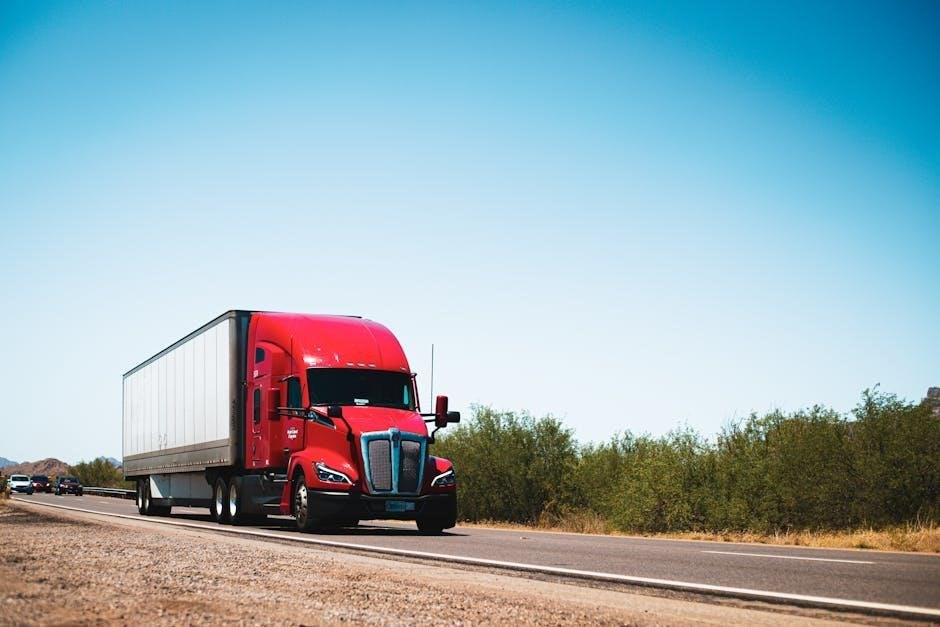
Class A CDL in New Jersey permits operation of combination vehicles with a Gross Vehicle Weight Rating (GVWR) of 26,001 pounds or more, provided the GVWR of the towed vehicle exceeds 10,000 pounds. This is the most comprehensive CDL class, frequently required for tractor-trailers and other large commercial hauling operations.
The NJ CDL Manual meticulously outlines the specific knowledge and skills tests required for a Class A license. Applicants must successfully pass the General Knowledge, Combination Vehicles, and any applicable endorsement tests (like Hazmat, if transporting hazardous materials).
Furthermore, a rigorous skills test, encompassing pre-trip inspection, basic control skills, and an on-road driving examination, is mandatory. This ensures drivers demonstrate proficiency in safely operating these substantial vehicles. Understanding weight limits, coupling/uncoupling procedures, and proper braking techniques, as detailed in the manual, is paramount for Class A CDL holders. Staying updated with NJ Transit and Stay NJ initiatives isn’t directly related, but demonstrates responsible citizenship.
Class B CDL
A Class B CDL in New Jersey authorizes the operation of single vehicles with a Gross Vehicle Weight Rating (GVWR) of 26,001 pounds or more, or any vehicle towing another not exceeding 10,000 pounds GVWR. This class commonly applies to large buses, box trucks, and straight trucks used for deliveries or specialized services.
The NJ CDL Manual provides detailed guidance on the specific requirements for obtaining a Class B license. Applicants must pass the General Knowledge test, along with the Class B knowledge test, and any necessary endorsements. The manual emphasizes understanding air brake systems, if equipped, and proper cargo securement techniques.
The skills test for a Class B CDL involves a thorough pre-trip inspection, a basic vehicle control skills assessment, and an on-road driving test. Drivers must demonstrate competence in maneuvering large vehicles in various traffic conditions. While unrelated, awareness of Union County legal matters and 163 login procedures showcases broad awareness. The manual is your key to success, ensuring safe and compliant operation.
Class C CDL
A Class C CDL in New Jersey is required for operating vehicles not meeting the definitions of Class A or Class B, but still designed to transport 16 or more passengers (including the driver) or hauling hazardous materials requiring placards. This often includes smaller buses, dump trucks, and vehicles transporting regulated substances.
The NJ CDL Manual details the specific knowledge and skills needed for a Class C license. Applicants must successfully complete the General Knowledge test, the Class C knowledge test, and any applicable endorsements, such as Hazmat. The manual stresses the importance of passenger safety regulations and proper handling of hazardous materials.

The skills test for a Class C CDL includes a pre-trip inspection, basic control skills, and an on-road driving evaluation. Drivers must demonstrate proficiency in safely operating the vehicle and adhering to all traffic laws. Staying updated on NJ Transit improvements and Omron PLC time conversions, while unrelated, demonstrates a commitment to continuous learning. The manual is your essential guide to obtaining and maintaining this crucial credential.

Maintaining Your NJ CDL
Regular medical exams and adherence to driving records are vital. The NJ CDL Manual outlines renewal processes and violation consequences, ensuring continued safe operation.
Medical Examination Requirements
Maintaining a valid Medical Examiner’s Certificate is paramount for all NJ CDL holders. The NJ CDL Manual details the specific requirements, emphasizing the importance of regular medical evaluations to ensure drivers meet the physical and mental standards necessary for safe commercial vehicle operation. These examinations must be conducted by a certified Medical Examiner listed on the Federal Motor Carrier Safety Administration (FMCSA) National Registry.
The medical examination assesses various health factors, including vision, hearing, cardiovascular health, and neurological function. Drivers are required to submit a Medical Examination Report (Form MCSA-5876) to the New Jersey Motor Vehicle Commission (NJMVC). The frequency of these examinations depends on the type of commercial driving operation; generally, it’s every two years for interstate commerce and potentially longer for intrastate operations, as outlined in the manual.
Failure to maintain a valid Medical Examiner’s Certificate will result in CDL disqualification, impacting a driver’s ability to legally operate a commercial vehicle. The manual provides comprehensive guidance on finding certified medical examiners and understanding the medical standards required for CDL certification.
CDL Renewal Process
The NJ CDL Manual provides a detailed outline of the renewal process, emphasizing proactive planning to avoid lapses in certification. CDL renewals in New Jersey typically occur every five years, but requirements can vary based on driving record and any endorsements held. Drivers will receive a renewal notice from the New Jersey Motor Vehicle Commission (NJMVC) well in advance of the expiration date.
Renewal generally involves submitting a completed application, presenting a valid Medical Examiner’s Certificate (Form MCSA-5876), and potentially undergoing knowledge or skills testing if there are violations on the driving record or changes in regulations. Staying informed about updates to Stay NJ and NJ Transit isn’t directly related, but demonstrates the need for ongoing awareness.

Online renewal options may be available for eligible drivers with clean records. The manual stresses the importance of verifying all information submitted and adhering to deadlines to ensure a smooth renewal process. Failure to renew on time can lead to CDL disqualification and require retesting.
Driving Record and Violations
The NJ CDL Manual dedicates significant attention to maintaining a clean driving record, as violations can severely impact CDL privileges. New Jersey operates under the Commercial Driver License Information System (CDLIS), which tracks violations across state lines. Points are assessed for traffic offenses, and accumulating too many can lead to suspension or revocation.
Serious offenses, such as driving under the influence (DUI) or reckless driving, carry substantial penalties and may result in immediate disqualification. The manual details specific point thresholds for different types of violations and the corresponding consequences. Updates regarding Stay NJ property tax benefits or NJ Transit improvements are unrelated but highlight the state’s ongoing changes.
Drivers have the right to review their driving record and challenge any inaccuracies. Maintaining a positive record requires strict adherence to traffic laws and responsible driving practices. The NJMVC provides resources for understanding and managing driving record information, emphasizing the importance of safe operation for all commercial drivers.